BLOGGER TEMPLATES AND YouTube Layouts »

Tuesday, August 10, 2010

Review 15: Mega Man 2 (NES)


Mega Man: Capcom's masterpiece series. The Blue Bomber has been in the gaming industry for more than 20 years now, and it seems that he's far from stopping. The Megaman series, also known as Rockman in Japan, has spawned several spin-off series, cartoons, figurines, and more, and it all came from one small game with very low expectations: Mega Man. That game started off everything we see today. However, it did not sell very well in comparison to some other games. Nonetheless, Capcom decided to make a sequel, and that sequel, Mega Man 2, may just be the reason you see the familiar blue robot today.


Story: 6/10

Actually, basically the only bit of plot in the entire story is that after Mega Man defeated the evil Doctor Wily in the previous game, Wily later counteracted with 8 of his own robots: Metal Man, Quick Man, Flash Man, Crash Man, Air Man, Heat Man, Bubble Man and Wood Man. Of course, Mega Man is able to beat all of them, and makes his way through Wily's Castle, where he defeats Wily again, and Wily begs for forgiveness, upon which Mega Man spares him and returns home.

Although this short plot would have been typical for some NES games, I am downgrading this because even the previous game had more story than this, when it explains Dr. Wily was a colleague of Dr. Light's, the one who created Mega Man, who soon turned bitter and set his efforts on world domination, and re-modified 6 of Light's robots to help him. Here, it just states that Wily built 8 robots to stop Mega Man. This game has the least plot of all the Mega Man games, and even though it didn't have to have a plot, I feel Capcom could have done better.


Gameplay: 9/10

Like every other Mega Man game, the game consists of you choosing a Robot Master's level from a menu without a specific order. Each Robot Master has a different quality: Heat Man is a fire boss and is able to throw flames at you and light himself up, and Flash Man can freeze time while shooting at you so that you can't dodge. The bosses' stages usually have something to do with the boss: Bubble Man's stage has water-based enemies and a section of it is underwater, while Air Man's stage is up high in the clouds with many instant death pits. Of course, at the end of every stage, you must face the Robot Master you chose as the boss. Upon their defeat, you gain their signature weapon.

After the defeat of all 8 Robot Masters, you have to go through Dr. Wily's Castle, which is linear and is composed of 6 stages which have even more bosses at the end. After you beat the last stage, you have beaten the game.

The gameplay of 2 is generally the same as the first one, where you fire your Mega Buster or whatever weapon you've gotten from the Robot Masters at the enemies of the stages while trying to reach the end. However, there were some likable additions, including E-Tanks, a staple of the series, which let you regain all your health, and Items 1, 2 and 3, which let you rise above the air with 3 rising platforms at a time, let you zoom across a stage on a jet sled, and let you ride up walls with a climbing platform, respectively. Because most NES games didn't have saving systems yet, Mega Man 2 also introduced a password system, which continued on 'till the release of Mega Man 8, which finally revealed a save system. 

Graphics: 10/10

The team really made an improvement with the graphics of the game. In the previous game, the graphics were not that impressive. The sprites had almost no shading, and the tiles didn't look that appealing. In this game, however, there are things in the background you probably won't notice unless you look very hard, such as gears and levers in Metal Man's stage, and the stages have all the right colors to support each other, making it look all the more appealing.

Music: 10/10

A lot of the music in this game will be stuck in your head after you play this game. Trust me. For the Robot Masters, there's Metal Man's music, which is upbeat and metallic-sounding, Bubble Man's music, which starts out calm and then comes into a great climax, Heat Man's music, which makes you get the feeling you're in a volcano, and more. 

Then there are the 2 Wily Stage musics, the first of which is fast-paced and complex (not to mention highly praised), and the second one being simpler, but more climactic and suspenseful, really giving you the feeling that you're at the end of the game.

 Finally, there's the boss music, which starts out with a big intro, then dives into a song that gradually goes into lower notes, then loops to right after the intro. Although it is used for every boss fight including the final one, and some people say it gets repetitive after a while, it's still sounds good for boss fights, at least in this game.

--And introducing a new section... REPLAY VALUE!--

Replay Value: 8/10 

This game is fun, no matter how many times you play it. I find it interesting trying to go through all the stages again in different orders and attacking enemies with different weapons every time. In the US release, there are 2 modes, Normal and Difficult, and in a recent release for the iPod and iPhone, Easy is added, so you may want to try those modes out too if you want different levels of challenges.

Overall: 9/10

Despite its lacking plot and things that could have been added that weren't, Mega Man 2 is still a very good game, and may have just set the entire Mega Man franchise for where it is today. You can find it on the Virtual Console for 500 Wii Points, and can buy it on an iPod Touch or iPhone for $2.99 regularly.
Friday, March 5, 2010

Spinout Server?

You've probably seen the pop-up box telling you to sign in to the server at spinout182.com. I have no idea what this is, or why it's there. I've contacted Spinout182 on Youtube about this... no answer. If anyone actually reads this blog, then just click cancel. I'm probably going to move to my own domain soon, so this problem shouldn't last long (along with all the other problems of this blog).

Monday, December 7, 2009

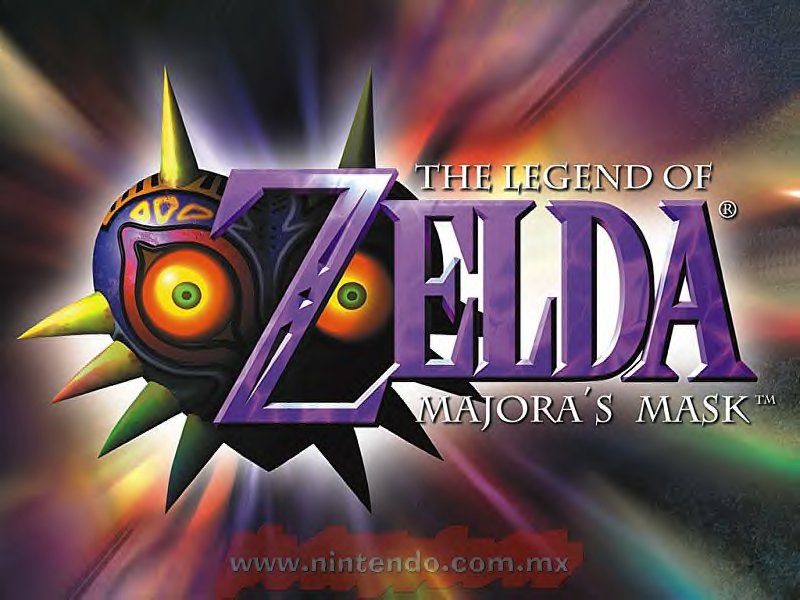
Review 14: The Legend Of Zelda: Majora's Mask (N64)


Majora's Mask is the sequel to the groundbreaking first 3D Zelda game, Ocarina of Time. Originally released to the public on May 27, 2000, Majora's Mask was stunningly different from its predecessors. Read on and find how.

Story: 10/10

While in the Lost Forest riding his horse, Epona, Young Link from OoT comes across a Skull Kid wearing a mysterious mask and his two fairies, Tael and Tatl. They steal Epona and the Ocarina of Time from Link and disappear into a dark cave. Link follows and, when the Skull Kid finds him, he turns Link into a Deku Scrub. When Tatl gets separated from Tael, her brother, she has no choice but to team up with Link.

Later on, Link finds a mysterious man, the Happy Mask Salesman, who tells him it is possible to get his human form back; he must only get the item that was stolen from him (The Ocarina of Time), and in exchange, Link must get the item stolen from the Salesman, Majora's Mask, which the Skull Kid has donned. Link adventures in a new town, Clock Town, to find out a way to get back his human form, while hearing about the impending doom that is to come to the alternate version of Hyrule he is in, named Termina, in three days.

On the midnight of the third day, Link and Tatl manage to corner the Skull Kid in the Clock Town tower, moments before he crashes the freaky-looking moon on all of Termina, and Link makes the Ocarina of Time fall out of his hand. Link remembers when Princess Zelda taught him the Song of Time to manipulate the flow of Time, and plays it. Suddenly, time is reversed for both Link and Tatl, and they warp back to the dawn of the first day and see the Happy Mask Salesman. He teaches Link the Song Of Healing, able to turn troubled spirits into masks, and turns Link's Deku form into a mask, bringing him back to human form.

 However, upon learning that Link has failed to bring back Majora's Mask, the Salesman goes into a rage, telling him how powerful and dangerous the mask is and that he must bring it back before he travels to another far-off land, on the eve the Moon will crash on Termina. The two leave. Tatl remembers that in the tower, Tael said something important:

"Swamp. Mountain. Ocean. Canyon. Hurry... The four who are there... Bring them here..."


Armed with this small knowledge, Link and Tatl race to find "the four" and Majora's Mask while rewinding, slowing down and even speeding up time using Link's Ocarina. Many things will happen in this dangerous and nightmarish journey...
  
Gameplay: 10/10

Like just about all other Zelda games, you play as Link.You mash up some baddies, get some Pieces of Heart, use up your Magic Meter, most of what you've seen in Ocarina of Time... except for two very important new gameplay devices. These features are the time system and masks.

First, let's go over the time system. As mentioned above, you only have three days to stop the Skull Kid before he dooms Termina. Also stated above, you can easily change that by manipulating the flow of time with three songs: the Song of Time, which rewinds time to the dawn of the first day (6:00), the Inverted Song of Time (a backwards version), which slows down time, and the Song of Double Time, which makes time switch to the next time period (the dawn of the first day switches to the night of the first day, the night of the first day switches to the dawn of the second day, etc.). A crucial thing to remember is that when you play the Song of Time, you will keep all your important items (Masks, the Ocarina, etc. ) but you will lose your Rupees (the currency in the Zelda series)and your other items. Dungeons you have cleared and chats with most people will be reverted to their original state as well.

Time is viewed by a semicircle-shaped timer, located at the bottom of the screen.  Here's a picture:


(yeah, my highlighting skills aren't too great)

The green diamond that says 1st tells you what day it is. The entire semicircle is one day; when it is daytime, a sun image will go across it, and in the night time, a moon image will go across it. Also, when the spark on the near right of the diamond goes in a full circle (or diamond, I guess you would call it) an hour will have passed. Note that when the Inverted Song Of Time's effects are active, the diamond will turn blue.

And so the tip is: DON'T WASTE YOUR TIME.


Masks are one of the most important items you encounter in all. There are 24 of them: 4 transformation masks, one of which is extremely hard to get (we'll talk about that later) and 20 other masks used for various things. Masks range in usefulness: Some are used to collect Pieces of Heart (get four of those and you get one extra heart (more health)), some have battle usage, one is used to defeat an otherwise difficult boss, and one is used to initiate a long and convoluted sidequest.

The transformation masks are able to give you completely different experiences. They are:

Deku Mask
Goron Mask
Zora Mask
Fierce Deity Mask

Each of these masks have different features. The Deku Mask turns Link into a Deku Scrub and allows you to skip on water up to five times, useful for the first dungeon, can shoot bubble blasts (which drain your Magic Meter) and is able to  use Deku flowers to fly to before unreachable places. The Goron Mask turns Link into a Goron and allows you to use powerful punches, curl into a ball and ground pound, plus roll at high speeds, sprout spikes and crush any opponents or breakable objects in his way, although this will deplete your Magic Meter. You are also invulnerable to lava. Wearing the Zora Mask turns Link into, well, a Zora, and allows you to breathe, swim and walk underwater, and use your fins as close-range and long-range weapons, the latter acting like a boomerang. Along with this, you can create an electrical shield that, like the spikes and the bubble blasts, make you lose some of your magical power. As well as all these powers, these three masks have instruments to replace the Ocarina Of Time: the Deku form has the Pipes of Awakening, which sound like trumpets, the Goron form has the Drums of Sleep, and the Zora form has the Guitar of Waves. 

And then there's the Fierce Deity Mask.

You get this OPTIONAL mask at the last stage of the game (I'm not going to explain how, just Google it). It transforms Link into an gigantic Oni reminiscent to Adult Link of OoT. It makes him a powerhouse, making him beat the final bosses with extreme ease. He gains a new sword which can unleash deadly attacks if you Z-Target, however it is double-handed, meaning Link cannot use a shield, and he cannot use items unless in a bottle. The only other disadvantage is that you can use this mask only in boss battles (unless you hack it, of course).

As well as these two features, there is also the Ocarina of Time from the game named after it, which can aid you in many ways. As well as the three songs mentioned above, there is the Song Of Healing, used to turn troubled spirits into masks (very important), the Elegy of Emptiness, which creates an exact replica of you in one of each of your forms (useful for a certain dungeon and only usable in the areas near it), and the Song of Soaring, which teleports you to the nearest owl statue you have gone to, which brings us to our next topic: saving.

 In OoT you could simply put the menu up, press save and save your game. Here, it's a lot more complicated. There are two ways to save: One is to play the Song of Time and your game will automatically be saved, meaning you must do what is required before you play the song and save, and the second way is to hit an owl statue (there are many scattered across Termina) with the image of Kaepora Gaebora from OoT (he also appears in this game too) with your sword and then check it. However, there are two twists: The first twist is that you must quit after saving, and the second is that after the first time you load the save file after this, the save will automatically be deleted, which means that if you make a mistake, you cannot fix it unless you use the Song of Time.

Other than this, though, all in all Majora's Mask has very unique gameplay, different than its prequel, and that is why I feel it is one of the best Zelda games.

Graphics: 8/10

Nothing really new here. The graphics are identical to OoT's, and so I don't really have anything else to say.

Pictures:


The Moon of Termina stares directly into your soul.
Also, that's what the diamond looks like when the Inverted
Song Of Time is played.


It's Zora Link!... Also the deceased soul of Mikau
the guitarist.


Goron Link. The mask houses the soul of Darmani the
Goron.


The spirit of the Deku Mask is believed by most to be
the son of the Deku Butler, of the Deku Royal Family.


Fierce Deity Link is VERY fierce...


It's the Possessed Skull Kid...


The Clock Tower of Clock Town, which opens up at
midnight of the third day.

Music: 10/10

Some of the awesome songs in this game, such as the Song of Time and Koume and Kotake's theme, are from Ocarina of Time. And then there are equally awesome songs made just for Majora's Mask. An example is the three themes of Clock Town, played respectively on the three days. The first theme is cheerful and slow, while the second theme has more woodwind instruments and is a little faster. The third theme is fast and uneven, and has an ominous undertone to it, as if the townspeople are trying to act cheerful, but can't at all because of their impending doom. It all just fits perfectly in.

Overall: 10/10

Majora's Mask is a must-play. Although most people say Ocarina Of Time was a better game, I disagree. Although OoT is longer, Majora's Mask, confusing as it may be for newbies to the game, is genius with its time system and the ability to play as different races. Almost every part of it is dark, and it really makes you feel the emotion. You can buy it on the Virtual Console for 1,000 Wii Points.


Wednesday, November 25, 2009

Review 13: Sonic The Hedgehog (Sega Master System)


No, this is not a review of the original 16-bit Sonic The Hedgehog for the Sega Genesis. Instead, this bi-week's review will be on the lesser-known, 8-bit port of Sonic The Hedgehog for the Sega Master System, released on October 25, 1991. Let's see how this game fares with its more popular counterpart.

Gameplay: 8/10

The gameplay in this port is generally the same as its counterpart: run, spin jump, collect rings and on some occasions defeat the evil Dr. Ivo Robotnik in zones divided up into 3 acts. However, there are a few differences, most negative. For starters, the game is much slower than the Genesis version, most likely because the Master System couldn't handle it. Also, the levels are much more straightforward and less psychedelic- heck, there aren't any loop-de-loops. However, there are less badniks- enemy animals in robotic shells- to oppose you, a positive covered up by the fact that you cannot pick up your rings once you get hit. That's right. Get hit once, and you can't regain health unless you find other rings. There are six zones in this port: Green Hill Zone, Labyrinth Zone and Scrap Brain Zone from the original, and three totally new (well, I guess you would call it old now) zones, Bridge Zone, Jungle Zone and Sky Base Zone for this one, with completely different layouts. And finally, another difference is that the Chaos Emeralds, as opposed to being in the special stages in the Genesis version, are hidden in one of the two non-boss acts in the zones.

Graphics- 9/10

Ah, yes. The main difference you will notice (immediately, anyways) is the graphical changes they had to make to bring Sonic over to the Master System. The graphics now have a scarcer palette and generally look less appealing (8-bit compared to 16-bit, duh). However, for 8-bit, it's pretty darn good. Below is a comparison of the two games.


16-bit


8-bit


16-bit


8-bit


16-bit


8-bit

Music: 10/10

The music sounds pretty good when converted to 8-bit style. Including favorites such as the Green Hill Zone theme, this game also has brand new songs for the new zones instead of just ripping the soundtrack from the original and converting it for the Master System. Something notable is that the Bridge Zone music (my personal favorite, by the way) is essentially the same thing as Believe In Myself, Tails' theme from Sonic Adventure 2.

Overall: 9/10

This port is more than a port. It actually feels more like a standalone game, what with new zones, new music and the other gameplay changes stated above. This is a true Sonic game.

Available in Wii Shop Channel for: 500 Wii Points


Tuesday, November 17, 2009

Review 12: Super Mario All-Stars (SNES)

Released on July 14, 1993 in Japan, Super Mario All-Stars was a compilation of the games Super Mario Bros. , Super Mario Bros. 2, Super Mario Bros 3 and Super Mario Bros. : The Lost Levels (also known as Super Mario Bros. 2 in Japan) with upgraded graphics, game play, and removal of glitches, a later release featuring Super Mario World. The game has been praised by critics, and was a "Player's Choice" game for the SNES.

Gameplay: 10/10

One classic Mario game is good enough, but four is far too great for words. All of these remakes play almost exactly as you would expect that game to play: SMB is all about jumping on Goombas, getting Super Mushrooms, finding out the Princess is in another castle, etc. SMB 2 has you defeat Wart and his minions using veggies (ain't that a message), and SMB 3 takes you to all sorts of worlds, whether icy, water-filled, or sandy. The Lost Levels weren't released in the West until this game, so in case you're wondering, it's just like the original, only ten times more tedious. This game featured Poison Mushrooms, fake Bowsers that you do not need to defeat, and reverse warp zones.

Graphics: 10/10

This release really gave all the games a major overhaul. Even the Bros. themselves are totally different than from their palette-swapping days. The backgrounds are more detailed, the enemies were updated- This is no mere assortment of the originals. It's all original from this game. And I don't care if it doesn't stand up to the graphics of other SNES games; it doesn't need to.

Photos:


The Lost Levels (as identified by the Poison Mushroom)


Super Mario Bros. 3


Super Mario Bros. 2


Super Mario Bros.


Title Screen


Title Screen (when you got it with Super Mario World)

Music: 9/10

The music in this remake is also revamped; practically all the tunes you've loved all those years are available in the clearer sound system (or something) of the SNES. You can hear the Overworld Theme, the Underground theme, the Castle theme, the Hammer Bros. theme- whatever theme you want. And plus, Nintendo has even sneaked in a few new themes for you to enjoy.

Overall: 10/10

This game has every right to be a Player's Choice game. It'll bring the nostalgia right back to you- and bring with it something more.

Available in the Wii Shop Channel for: N/A

Sunday, October 25, 2009

Review 11: Super Mario RPG (SNES)

(Pic isn't working, stay tuned)


And now for one of the most loved games of all time, the game that captured the hearts of millions with a puppet-possessing star, the game with one of the most catchy tunes of all time, it's named... Well, if you read the title you'd know. And what good gamer doesn't know the title of this game? Its original release date being March 9, 1996, this game was one of the last games Square (now Square Enix) made with Nintendo.

Story:10/10

I know, I know, either I give a great review or a horrible one. But here, I really mean my rating. Unlike most Mario games out there, this one doesn't deal with the regular Bowser-kidnaps-Peach-then-Mario-rescues-her, but instead, Peach isn't the victim. Wishes are. You see, there is a magical place above the skies, the Star Road. And I don't mean cars driving 30,000 feet in the air. The Star Road grants the various wishes requested by people, whether it is wedding wishes or wishes of hope. However, a sentient gigantic sword, Exor, falls from the heavens and stabs through Bowser's Castle (where Mario and Bowser are having another battle to save the princess), shattering the Star Road in the process, which breaks into 7 stars that scatter all over the world. Meanwhile, Mario, who has landed right back in the Mushroom Kingdom, informs the chancellor of what was happened. He tells Mario to find Peach, and then investigate the sword. Along his way, he meets Mallow, who he helps recover a mysterious Frog Coin from a thief named Croco (and then joins his party). Upon coming back, he finds the Mushroom Kingdom has been overrun with enemies who claim they are from the Smithy Gang, a group bent on world domination headed by one named Smithy, who turn out to be the same ones who sent Exor falling from the sky. He defeats them and their springy-knife leader, Mack, and finds a Star Piece, which he decides to keep. He and Mallow set off on their quest, later meeting a star-ish being who has entered the body of a wooden doll named ♥♪!? (but that's too hard to pronounce, so he calls himself the name of the doll, Geno) and helping him retrieve another Star Piece from a bow-like character, Bowyer. Afterwards, he tells Mario about the Star Road and the Smithy Gang and joins his party. Now with two goals in mind, Mario journeys with his new companions and comes across Bowser, who joins Mario to regain his castle, and finally Peach, whom he rescues from a childish, ugly man by the name of Booster who wants to make Peach his bride, making his last two companions. In the end, the group gets the Star Pieces, defeats the robotic Smithy, and repairs the Star Road.


(Wow, that was long.) 

Gameplay: 10/10

I used to spend countless hours just trying to get past the tricky-but-awesome battles and the tricky-but-a-little-less-awesome overworld.

You'll do the same trying to get past such terrors as the sunken ship of a pirate, a land full of cloud-people, and the most diabolical Geno's maze. In battles, you can choose 3 of 5 playable characters, Mario, Mallow, Geno, Bowser, and Princess Toadstool (Peach) (except for Mario, who you cannot switch out) to fight enemies: maybe one, maybe multiple. You have 5 options: attack, use a special attack (coming up later), use an item, simply defend, or run. As with most RPGs, as you defeat enemies, you gain experience, which helps you level up, and gold, which you obviously use to buy items. When you level up (max. level 30), you, also like most RPGs, increase your stats. However, you can also choose a stat to raise as a bonus: health, attack and defense, or magic attack and defense. Also, at certain levels, you get special abilities which can attack opponents, be used to buff your stats temporarily, heal you, and more. The amount of times you can use special abilities (Flower Points) can't be raised by leveling up; instead, you need to find items such as Flower Tabs and Flower Jars. Speaking of items, there are several in the game, most which you will need dearly, such as equips to boost your attack, defense, and other stats, Pick Me Ups, which revive fallen characters, and Kerokero Colas, which completely heal your party. Oh, and one last thing: When attacking enemies, be sure to hit the attack button twice at a certain beat to increase your damage. As for the overworld, it's pretty simple: Just navigate, run, jump, solve puzzles, and talk to everyone.

Graphics: 10/10

Another 10/10? Why? Because this game truly went above and beyond the maximum of the SNES' 16-bit graphics. Just look at the title picture. That looks almost nothing like a SNES game, and yet it is. It's as 3-D as one can go.

Pictures:


Overall: 10/10

To sum it all up in one word: AWESOMENESS. I'm totally glad they put this on the Virtual Console, and I would definitely put it in my Top 10 list of favorite video games.

Wednesday, October 14, 2009

Review 10: Jet Set Radio/ Jet Grind Radio (Dreamcast)


Hoorah! My 10th review! Well, considering it's been more than a year that I founded this site, it's not a big celebration, but anyways...


Remember my last review? Well, it doesn't take a genius to figure out that this is the prequel (unless you don't read titles, for which I pity you). Jet Set Radio was originally released June 29, 2000 in Japan. Its reception? Two words: Sleeper hit. Meaning that, like Jet Set Radio future, it was met with absymal sales, but ended up with a terrific rating for its originality, funky-fresh feel and, possibly most of all, bringing cel-shading to how popular it is now.

Story: 10/10

In Asia, there is a city that cannot be found on any map named Tokyo-to, but people just call it Tokyo. Right now, the two biggest things in Tokyo are the strange punks, nicknamed Rudies, wearing inline skates powered by new Netrium batteries, and Jet Set Radio, a pirate radio broadcast manned by DJ Professor K, which only plays hardcore and non-stop music. The Rudies have gone and tagged graffiti all over Tokyo-to, claiming it's their way of expressing their freedom. But since the Government and the Rokkaku Group combined their efforts to create the "21st Century Project", things have never been the same. Police crackdowns on the Rudies are getting tighter, and the Captain of the Police force, Captain Onishima, wants to put them behind bars ASAP. Tokyo is ready to explode...

You start out as Beat, a Rudie who's looking for people to join his new gang, the GGs. After you complete two sets of challenges presented by two Rudies, Gum and Corn (named Tab in Jet Grind Radio), they join you. Then, the real game begins.

Gameplay: 10/10

For the most part, Jet Set Radio has the same gameplay as Jet Set Radio Future: Skating, grinding, stylish jumps. However, there are some major differences between the two: For one thing, there's a time limit. So here, you have to both get the job done and get it done ASAP. For another, there's a different spraying system: In the sequel, you had to press the right trigger and you would get one part done. Here, you spray over the arrows and move the control stick in the directions indicated by the screen. For example:


And then you would finish one part. There are three areas in Jet Set Radio: Shibuya-cho, Benten-cho and Kogane-cho (though two areas, Grind Square and Bantam Street are added in Jet Grind Radio), where you fight three gangs fighting for their turf: The heartbroken Love Shockers try to take your turf, Shibuya, while you attempt to take Benten from the cyborg Noise Tanks and Kogane from the monster-dressed gang Poison   Jam.

Graphics: 10/10                                                                

Like I said before, the Jet Set Radio games brought cel-shading to what it is now. Just look at the above image: It's as cartoonish as a 3-D 128-bit game can be, and will make you want more games like this.

Some more images:


Music: 10/10

Like Jet Set Radio Future, Jet Set Radio has a full soundtrack filled with smooth tracks, such as Bout the City, my personal favorite, Everybody Jump Around (which makes a bit of a cameo in Fusion Frenzy, a popular Xbox game), and songs that are remixed in Jet Set Radio Future, such as Let Mom Sleep, Rock it On and That's Enough.

Overall: 10/10

Even if you look hard, it's extremely hard to find flaws in this masterpiece. This game is one of the true reasons the Dreamcast was a masterpiece, and another one of the best games Sega ever marketed.